Oven models · E Series
Wolf SO30PE: Why Does It Run Cool?
SO30PE/S/PH 30-inch built-in single oven Built 2015–2020
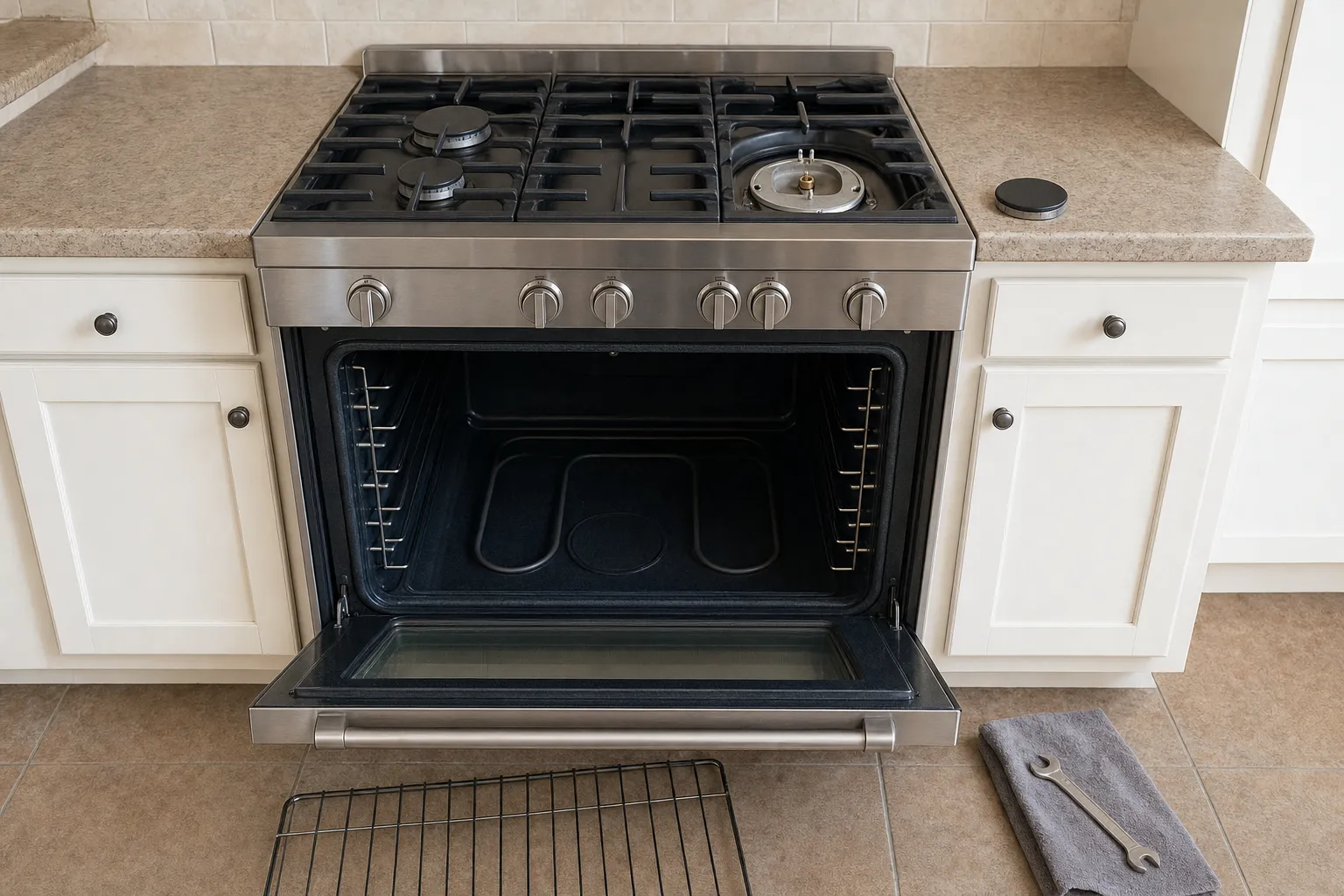
The SO30PE is Wolf's 30-inch E Series single oven in the Professional style, made from 2015 to 2020. If yours takes an age to cook while the display insists it is at temperature, call Wolf Repair Bellevue at (425) 629-0033. The $89 visit separates a sensor fault from a door leak before any price is set.
- Written and checked by
- Imogen Fairhurst
- Dated
- Bench speciality
- ovens and calibration
- Years at it
- 12
- Control panel and board
- Cooling-air path behind the panel
- Broil element
- Temperature sensor
- Convection fan behind its cover
- Bake element (often hidden below the floor)
- Door gasket
- Self-clean door lock
- Door hinges
What fails on it
- Drifted temperature sensor The sensor is the probe that tells the oven how hot it is. When it drifts, the display reaches your setting on time, yet roasts need far longer than the recipe says.
- Door seal gone flat The gasket around the opening is crushed, torn or brittle, so warm air escapes along the top edge and every preheat drags.
- Hinges letting the door drop One side of the door no longer pulls in tight. Wolf hides the hinges inside the door itself, so checking them means lifting the door off.
- Convection fan not moving air Convection results turn patchy, and the back of the cavity stays silent in a convection mode once preheat has finished.
- Control not calling for heat Rarer: the oven stops topping up its heat part way through a bake. Looked at only after the sensor, door and fan are cleared.
Rule out the easy things first
Let the oven finish preheating before you judge it, and resist opening the door to peek; heat escapes and the fans pause while it stands open. Then set a separate oven thermometer on the middle rack and compare it with the display once the reading settles.
Last, close the door slowly and watch the two top corners. If one meets the frame noticeably later than the other, the door is part of the story, whatever the thermometer says.
Why the sensor is tested before the control
What we usually find on a cool SO30PE is a sensor that has wandered, not a failed board. It is the cheaper part and the likelier one, so it is measured first. If it reads true and the door seals, the fan is run on convection and listened to, and only then does the control get a look.
Common questions
- Can I recalibrate my SO30PE myself?
- Wolf's own guidance says calibration is seldom needed and treats it as a service job rather than an owner adjustment. Whether a low reading is put right by adjusting or by a new sensor is decided after testing. Wolf Repair Bellevue, (425) 629-0033, measures the oven against its display on the $89 visit and tells you which it needs.
- Is the fan supposed to go quiet after preheat?
- In a plain bake mode, yes. Wolf says its convection fans run during preheat in any mode but carry on afterwards only when a convection mode is chosen, and they stop whenever the door is opened. A fan that stays still in a convection mode after preheat is the case worth reporting.
- Where is the model number on an SO30PE?
- Open the door and look just below the control panel on the right-hand side. The plate there carries the full model line and the serial number. Read both out when you call, because every part we quote for an E Series oven is checked against that serial before it is ordered.