Oven models · M Series
Wolf SO30TM Oven Running Cool or Slow to Heat?
SO30TM/S/TH 30-inch built-in single oven Built 2015–2023
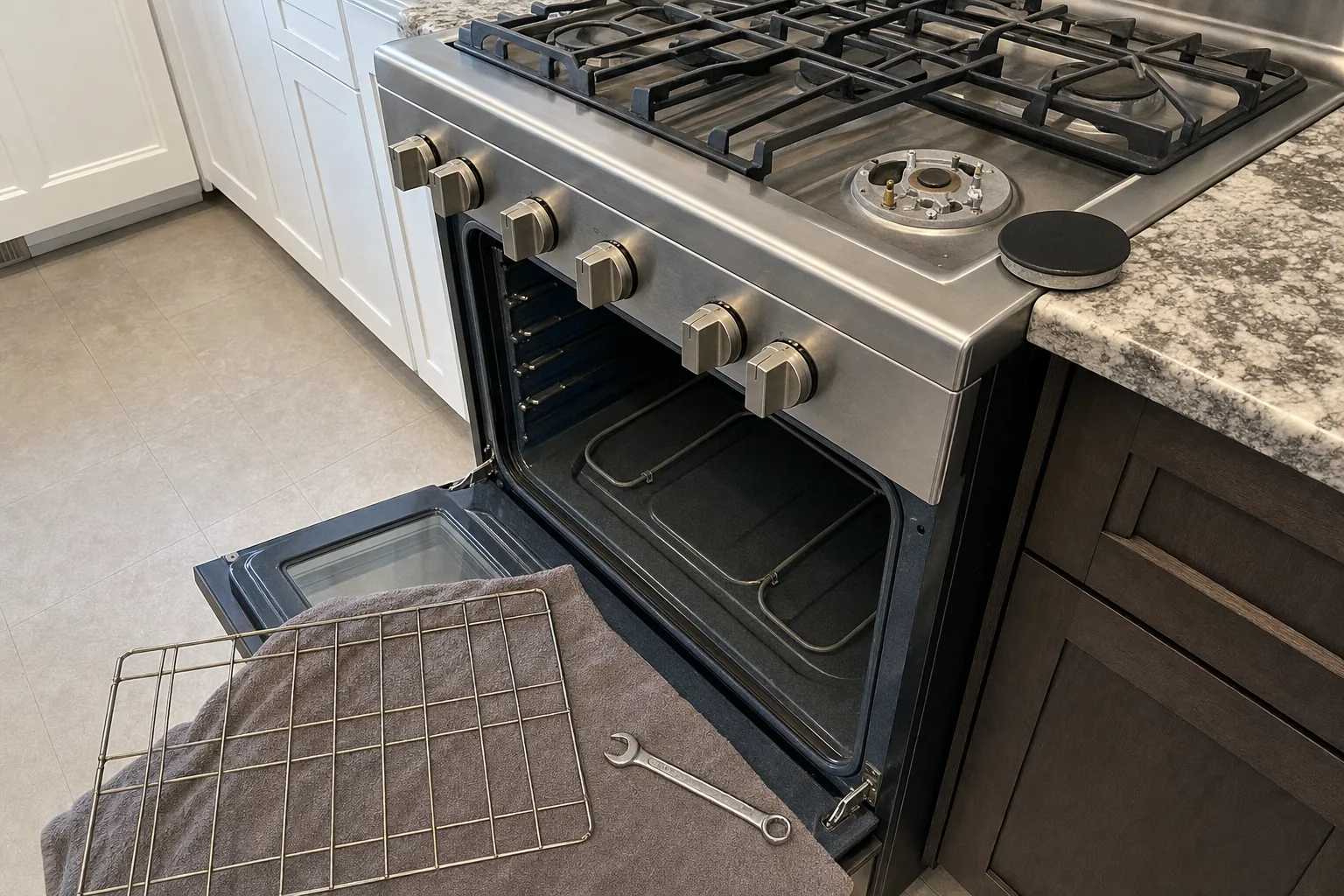
An SO30TM that takes longer to preheat, or turns out pale bakes at a setting that used to work, has usually lost accuracy at the sensor or heat at the door. Wolf Repair Bellevue, (425) 629-0033, checks both on the $89 visit and prices the fix before any part is ordered.
- Written and checked by
- Imogen Fairhurst
- Dated
- Bench speciality
- ovens and calibration
- Years at it
- 12
- Control panel and board
- Cooling-air path behind the panel
- Broil element
- Temperature sensor
- Convection fan behind its cover
- Bake element (often hidden below the floor)
- Door gasket
- Self-clean door lock
- Door hinges
What fails on it
- Sensor reading low The display reaches your setting on time, yet a separate thermometer on the middle rack reads short and the bakes agree with it.
- Heat escaping at the door A flattened gasket or a door that meets the frame unevenly lets heat out along one edge, so the oven works longer for less.
- Hinges out of square One side of the door closes a beat after the other. The gap it leaves is small, but enough to stretch every preheat.
- Tired convection fan On convection modes the air stops moving evenly: the back of the tray browns while the front lags behind.
- Control not switching heat The least likely cause: one mode stays cool while the others heat. Tested only once everything above has passed.
Three checks before you book
Let the oven finish its preheat and settle before you judge it, with a separate oven thermometer on the middle rack. If the thermometer and the display roughly agree, the oven may just be slower than you remember. If they part company, note by how much and on which mode.
Then look at the door. It should meet the frame evenly on both sides and close without a nudge. Look at the gasket but leave it be: Wolf’s guide warns that rubbing or moving it can spoil the seal.
Last, clear the oven itself. Take out any foil lining the floor, which Wolf’s guide says not to do, and make sure nothing blocks the vents just above and below the door.
When the control is the answer
Seldom first. The screen is what you look at, so it takes the blame, yet on an SO30TM the sensor is read against a probe and the door and fans are checked before anyone touches the control.
It becomes the answer only when a mode that should heat stays cold with every part upstream of it working. At that point the control band applies, and you hear the figure before a board is ordered.
Common questions
- Is the SO30TM a different oven from the SO30PM?
- Both are M Series single ovens from the same years, 2015 to 2023, in different styles. Wolf's M Series guide shows a selector knob on the Professional model only, so the Transitional is run from its touch panel. Parts are matched to the full line on the plate, SO30TM/S/TH, so copy it exactly.
- What does a running-cool SO30TM usually cost to fix?
- It depends which part is at fault. A sensor job and a door job each have a band, shown in the box at the top of this page; the $89 diagnosis decides which applies and is credited when you go ahead. Wolf Repair Bellevue, (425) 629-0033, gives one figure before any part is ordered.